
Fashion is made to last—or so the marketing goes. Meticulously sourced materials, centuries-old techniques and expertly honed craft all add up to a promise of a timeless process. But even luxury products and materials end up on the scrap floor or collect dust on shelves, leading to excessive and expensive waste, which some brands have been known to eliminate through shocking practices such as incineration. Since no one wears an image problem well, least of all a business predicated on putting its best foot forward, brands from Chanel to Gucci to LVMH have made sustainability—once a mere add-on—central to the future of fashion.
In June, Chanel launched Nevold. A portmanteau of “never” and “old,” the ambitious program aims to build on the brand’s existing circularity efforts, such as weaving recycled threads into its tweed and using processed leather waste in shoes and bags. Nevold functions as a B2B platform that connects companies and partners to incorporate closed-loop recycled fibres (a process that maintains the material’s properties) into the luxury manufacturing supply chain; its focus, among other things, is on developing hybrid materials that blend recycled and virgin content. The heels of Chanel’s slingback pumps, for example, are now made of a recycled component, not plastic.
“At Chanel, we didn’t destroy unsold products. But we also didn’t yet have a real system to understand their full potential. Nevold is that system,” Bruno Pavlovsky, president of fashion at Chanel and Chanel SAS, tells Vogue Business.
This comes on the heels of programs such as Gucci-Up, which collects leftover high-quality leather, textiles and obsolete materials generated by the production process and puts them back on the market or donates them. Similarly, LVMH’s Nona Source offers emerging brands in Europe access to deadstock LVMH fashion and leather goods materials for purchase via a digital platform. Then there is Prada’s Re-Nylon collection, which uses regenerated nylon from recycled plastic collected from oceans, landfills and textile fibre waste; Bottega Veneta’s Reserve Leather series, handmade from overstock material; Loewe’s Surplus Project that crafts woven bags from surplus leathers; and Hermès’ Petit h that uses leftover materials to create whimsical items. A new mindset has taken hold.


“What we’re seeing is the culmination of a cultural and creative reckoning,” says Elizabeth Cabral, founding partner, fashion sector of SustainChain, a sustainability action platform, and co-founder of Purpose Collective creative agency in New York. “Luxury, at its best, has always been about longevity. These recycling efforts aren’t just about reducing waste; they’re about reclaiming the narrative of what luxury means: something made to last, to be cared for, to carry history forward.”
While luxury has always clung to a story of value and authenticity, consumption patterns in the West have inevitably driven demand for more product, more frequently. Something that Eastern cultures traditionally sidestepped with a different set of principles.
“In the Eastern world, the essence of sustainability has always been woven into daily life through modesty, gratitude and respect for what we have,” says Riya Rohilla, a fashion and accessories designer in India. “The act of mending, reusing or passing something down was never just practical; it was an expression of reverence for the resources entrusted to us.”
Eastern practices such as Japanese boro and Indian kantha draw from the principle that fabric mending, repair and reuse showed respect and appreciation for cloth. In boro, patched and restitched indigo-dyed cotton fabrics of the rural working class resulted in beautiful patchwork patterns and reflected a concept of “mottainai” or regret over waste. And kantha used hand-stitching, turning worn-out saris and dhotis into quilts, blankets and other household items, representing the passing down of stories through needle and thread.
Gen Z are more vocal, more values-driven and more likely to expect brands to act responsibly
“What we see in global luxury today is a rediscovery of that timeless wisdom—a reminder that harmony with nature is not a modern invention, but an ancient truth,” Rohilla says. “While the West is industrializing this value, the East has long lived it, quietly, gracefully, through generations.”
As these slower principles disseminate within the culture and consumer behaviours shift, the hope is that brands’ textile recycling practices will connect with buyers emotionally, especially the highly desirable Gen Z cohort, who are estimated to account for 25 per cent of all luxury spending by 2030.
“For younger consumers, particularly Gen Z, sustainability is certainly part of the conversation,” says Sabine Weber, professor of fashion, sustainability and product development at Seneca Polytechnic in Toronto. “They are more vocal, more values-driven and more likely to expect brands to act responsibly on social and environmental issues.” Although, she adds, these values don’t always translate into consistent buying patterns.
While encouraging, the textile recycling innovations thus far are a drop in the bucket, and it’s going to take some very future-forward thinking—and a lot more research—to make a dent. “There have been some really interesting developments in biological recycling, where different bacterial strains are used to ‘eat’ or break down plastics into recyclable components,” says Hannah Auerbach George, a PhD candidate at the Victoria & Albert Museum in London. “This method of biological recycling is really exciting when thinking about how we can tackle the huge amounts of complex waste already amassed in landfills.”


According to Weber, the only way for the fashion industry to truly reduce its carbon footprint is to “radically increase textile recycling across all fibre types.” This includes recycling cotton and polyester blends—which is challenging, since the natural and synthetic fibres need to be separated without degradation—and investing in “preferred fibres,” such as the high-performance yarns made from climate-positive raw materials that Hugo Boss produces with Swiss tech company HeiQ. “Scaling up remains a major challenge due to limited infrastructure and high production costs,” she points out. “Textile recycling is expensive—a recycled fibre can cost up to three times more than a virgin fibre. This explains why progress in fibre-to-fibre recycling has been relatively slow.”
Ultimately, it’s about continuing to shift priorities to make way for innovation and reinvention. It is, after all, the industry’s ethos to create desire in the rarefied and new.
“Working with recycled or deadstock materials definitely introduces constraints,” Cabral says. “But those very constraints often lead to innovation. In many ways, it reawakens the artisan’s original intuition: listening to the material, adapting design around what exists and transforming imperfection into beauty.”

Stay Curious
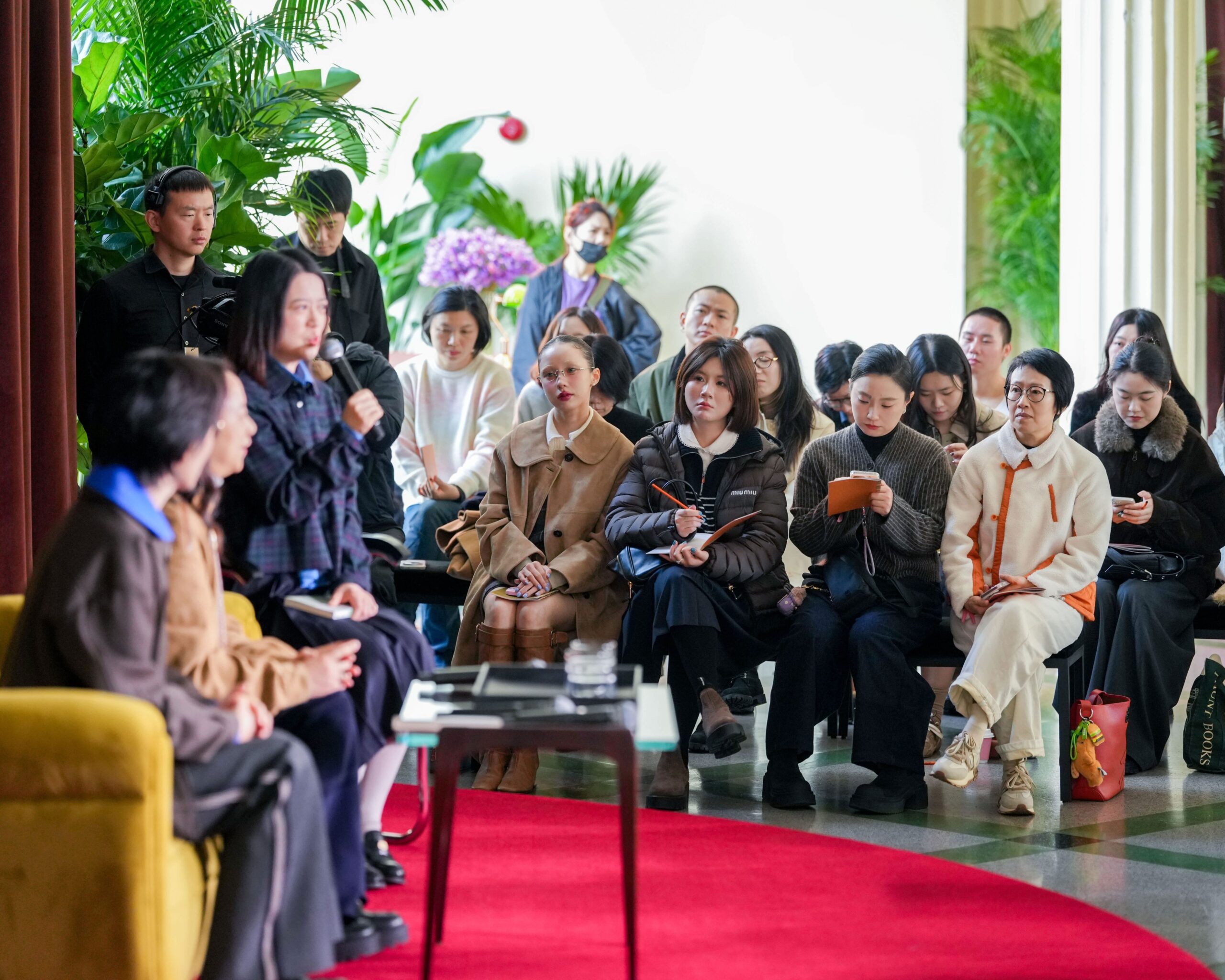
Well-Versed: How High Fashion Is Falling in Love With Literature
Notebooks in hand, pens poised to take notes, a Who’s Who of Chinese culture – including act

Sports Car Racer Samantha Tan Is Right Where She Belongs
The athlete, global ambassador for BMW M Motorsport and team owner of Samantha Tan Racing is making

3’s Holiday Gift Guide
The end of the year is nearly here, which means it’s time to look back and reflect; celebrating ev

